还在看 13F ?真正赚钱的人都是这样操作和复盘 - 本周回顾
⚡ 三行干货
- 我们自己写下的两个作废条件本周全部触发,原文一个字没删;指数两创新高,而十七只里七只是跌的。
- 全表重扫后不是三座,是三周里铺了十二座、约 400 万张,主体位置从跌 10.7% 一路走到跌 38.3%。这些全是当天就看得见的。
- 而周五的 13F 讲的是六周前的事。同一个问题两种答法:7 月 24 日挂在链上的那个价,要等到 11 月 14 日才进申报文件,中间隔 113 天。
这一期讲什么
第 1 到第 3 节是本周的三个亮点:说错的两条怎么认账、新高背后十七只里七只在跌、以及三周铺出来的十二座价目表。
第 4 节讲周五的 13F 为什么是旧闻,第 5 到第 7 节讲同一个问题在期权链上怎么当天就有答案,以及你手里有票的话这套东西怎么用。
不着急的话,读完第 3 节和第 5 节就有数了。
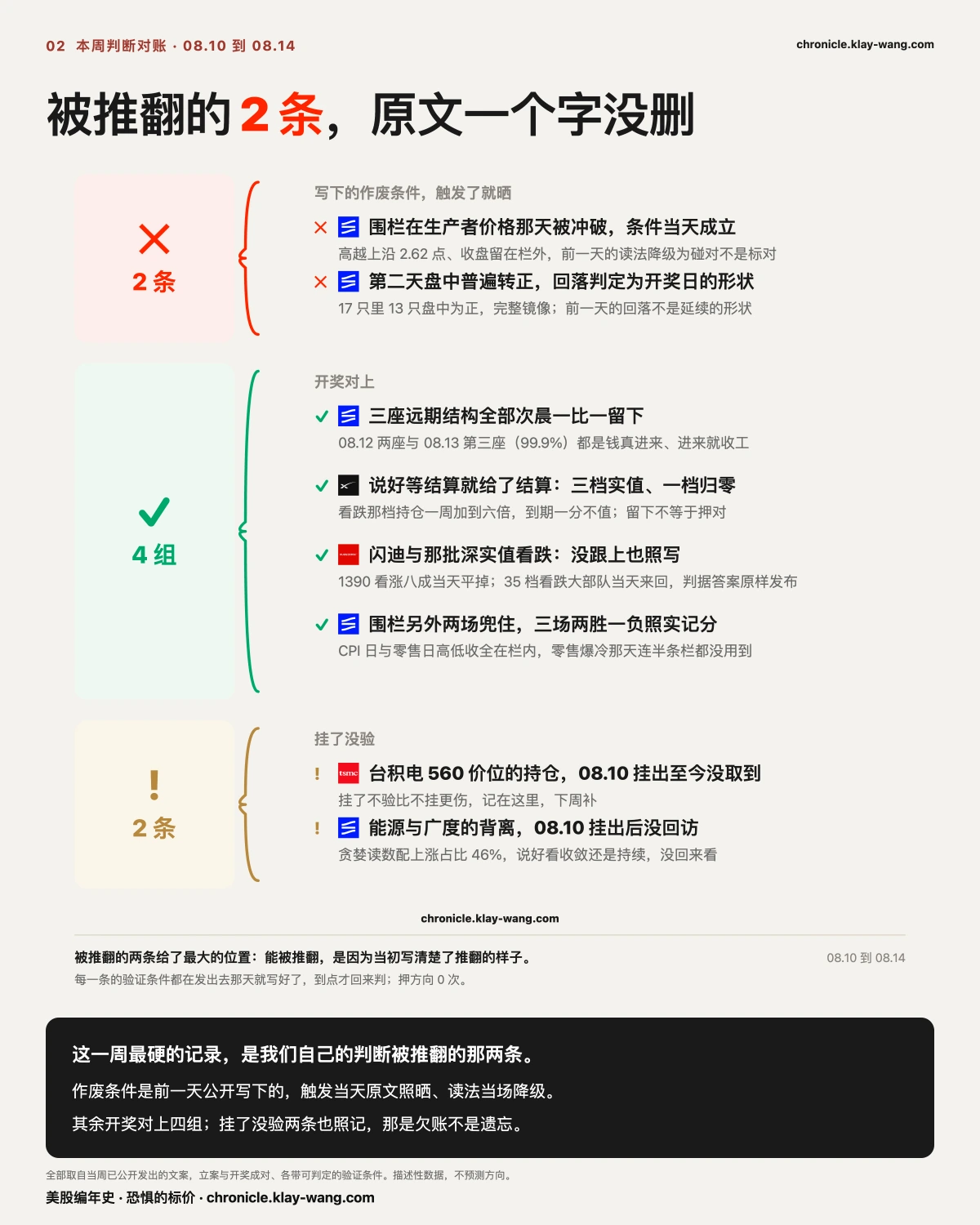
〔对账〕被推翻的那两条,我们一个字没删
周三通胀日,开奖前挂出的围栏兜住了,我们写了一句:市场提前把这场开奖标对了价。同一段里也挂了作废条件:如果周四生产者价格落地时同样的围栏被冲破,那这次就只是碰对,不是标对。
第二天它就被冲破了。指数盘中越过上沿 2.62 点,收盘也留在栏外。按我们自己写下的规矩,那句判断当场降级,原文一个字没改。
横截面那条同样被触发。周三我们记到十六只高开、十四只被从开盘一路卖回去,写了句这是开奖日当天的形状,作废条件是第二天盘中若普遍转正,这个回落就只属于那一天。第二天十七只里十三只盘中转正,条件成立。
四组开奖对上,两条挂出去没回来验,照记为欠账。能被推翻的判断才叫判断。
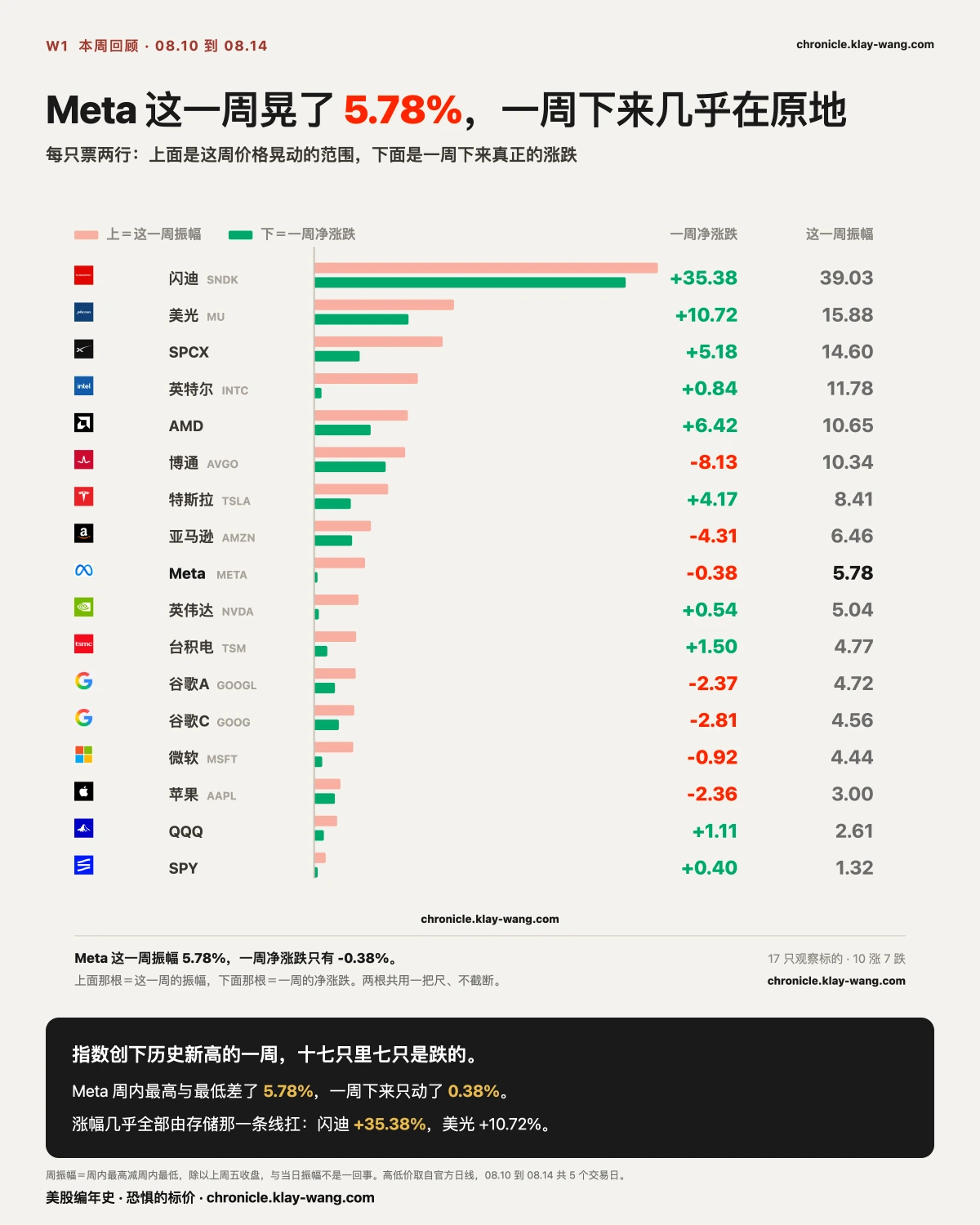
〔横截面〕指数两创新高,十七只里七只在跌
这一周标普 500 基金涨 0.40%,纳指 100 基金涨 1.11%,周三周四各创一次历史新高。同一周,我们观察的十七只里有七只是跌的。
两头拉得很开:闪迪涨 35.38%、美光涨 10.72%、AMD 涨 6.42% 在一头;博通跌 8.13%、亚马逊跌 4.31% 在另一头。首尾相差四十三个百分点。指数那 0.40%,是这些东西相互抵消之后剩下的残值。
还有一个数比涨跌幅更值得看:振幅,一周里最高价和最低价之间的距离。英特尔这一周涨了 0.84%,几乎等于没动,但它的振幅是 11.78%。也就是说它在一个将近十二个点的区间里来回走了一趟,最后回到原地附近。拿着它的人,中间见过相差一成多的两个价格。
涨跌幅是位移,振幅是这只票真实走过的路。同一只票同一周,这两个数可以差十倍。
顺带一句成本侧:一个月内的波动率从 15.46 降到 14.25,降了 1.21 个点;而一年期从 22.76 到 22.75,一周只动了 0.01。近端是情绪,远端是成本,这一周松的只有情绪。
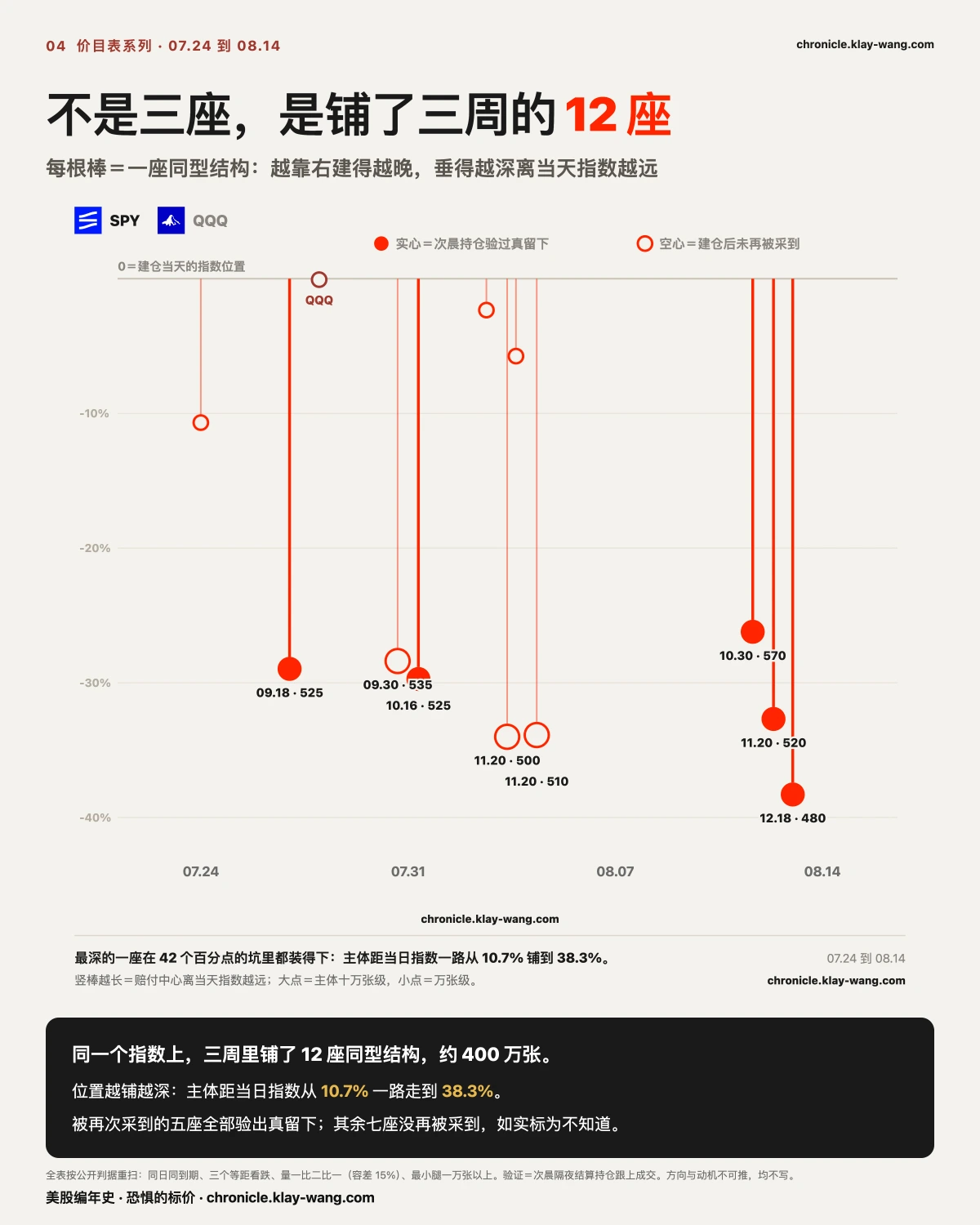
〔纵深〕不是三座,是铺了三周的十二座
本周日更里写过三座同型结构。周末我们把全表重扫了一遍,按同样的公开判据:同一天同一个到期、三个等距的看跌价位、张数一比二比一、最小那条腿一万张以上。
结果是十二座,从 07.24 一直排到 08.13,合计约 400 万张,其中十一座在标普 500 基金上,一座在纳指 100 上。
连起来才看得见两条形状。一是同一个到期被反复搭:11.20 那个到期被搭了三次,08.03、08.04、08.12 各一次,而且每次整体上移 10 点,跟着指数往上挪。二是越铺越深:主体距当日指数的距离,从最早那座的 10.7%,一路走到最新那座的 38.3%。
已经被再次采到的五座全部验出真沉淀;其余七座建仓后没再被采到,标为不知道,不猜。
红线不变:不写这是什么结构、不猜谁在做、不推方向。我们能说的只有形状和沉淀。
但有一件事这十二座已经说清楚了:三周里,有人一次又一次把如果跌、要在哪个位置拿到赔付,写在了明面上。每一次都是当天就能看见的。
记住这句,下一节马上要用到。
〔13F〕新闻是新的,交易是旧的
上一节那十二座,最要紧的一点是:它们全都是当天就能看见的。 建仓那天成交摆在那儿,第二天早上的持仓给出答案,谁都能查。
而这一周还有另一类信息刚刚露面,性质完全相反。
周五是二季度 13F 报告的申报截止日。你这两天大概率刷到了一批某某清仓某某的标题。
13F 是季末持仓快照。二季度截到 6 月 30 日,申报期限 45 天,正好是周五。所以那些文件是这两天才出现的,里面描述的交易发生在六周以前。
它还有两件事不告诉你:不告诉你什么时候买的,也不告诉你用什么价买的。 你只能看见季末那一刻手里剩下什么。
拿一份描述 6 月底持仓的文件去解释这两天任何一只票的涨跌,是把申报日期当成了交易日期。
〔另一条路〕同一个问题,期权链当天就答了
有一个地方不用等六周:期权链。因为一份合约上写着的,正是 13F 缺的那两样东西:什么价,什么时候之前。
举个我们表里记到的例子。2026 年 7 月 24 日,长天期异动表多了一行:SpaceX 12.18 到期、行权价 115 的看跌合约,当天成交 1109 张,进场持仓 7447 张。第二个交易日隔夜持仓变成 8398 张,净增 951 张,留下了当天成交的 85.8%,按我们固定的判据属于真建仓。
那天我们不知道是谁。一个月后,段永平公开说了这笔交易:卖了 1000 张,每股收 23.26 美元。我们量出 951,他自己报 1000,对上了。
这笔账真正的关键,不是他收了 232.6 万,是他的接货成本不是 115,是 91.74。 因为 23.26 已经先收进来了。整笔交易就是一句话:现在的价我不急着买,你付我每股 23.26,未来五个月你愿意的话我按 115 接。
12 天后财报落地,SpaceX 收 108.27、当天跌 13.61%、盘中最低到过 106.66。他没等着被行权,直接买了 10 万股。说的和做的是同一件事。
现在回头算日子:这个价 7 月 24 日就挂在链上,谁都看得见;而它要出现在申报文件里,得等三季度报告,也就是 11 月 14 日。中间隔 113 天。
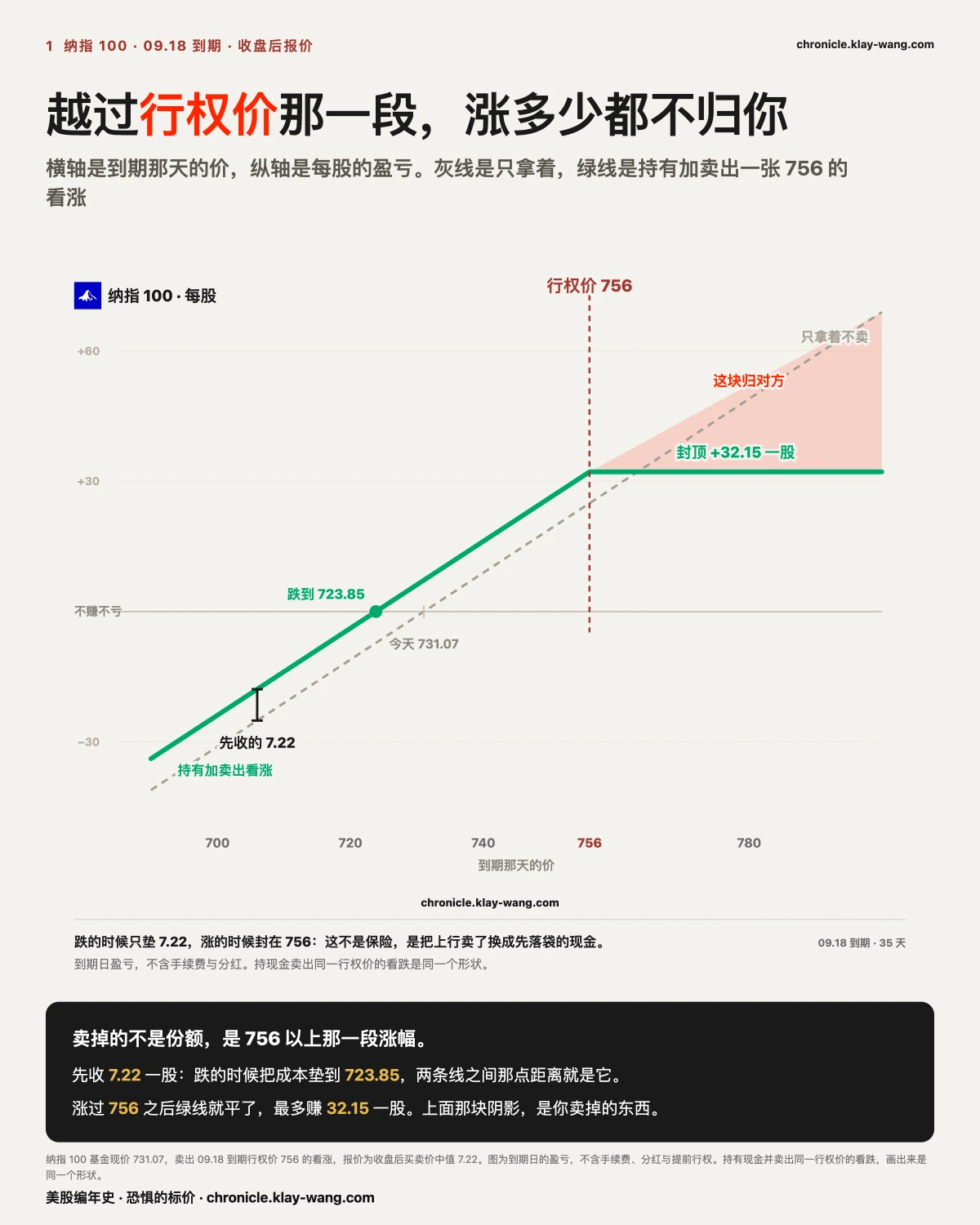
图上那条线就是这件事的形状:选定的那个价是竖线,到期时没越过它,收的钱全归你;越过了,那一段就跟你没关系,线从那里开始就平了。
〔怎么用〕你手里有票的话,这套东西怎么读
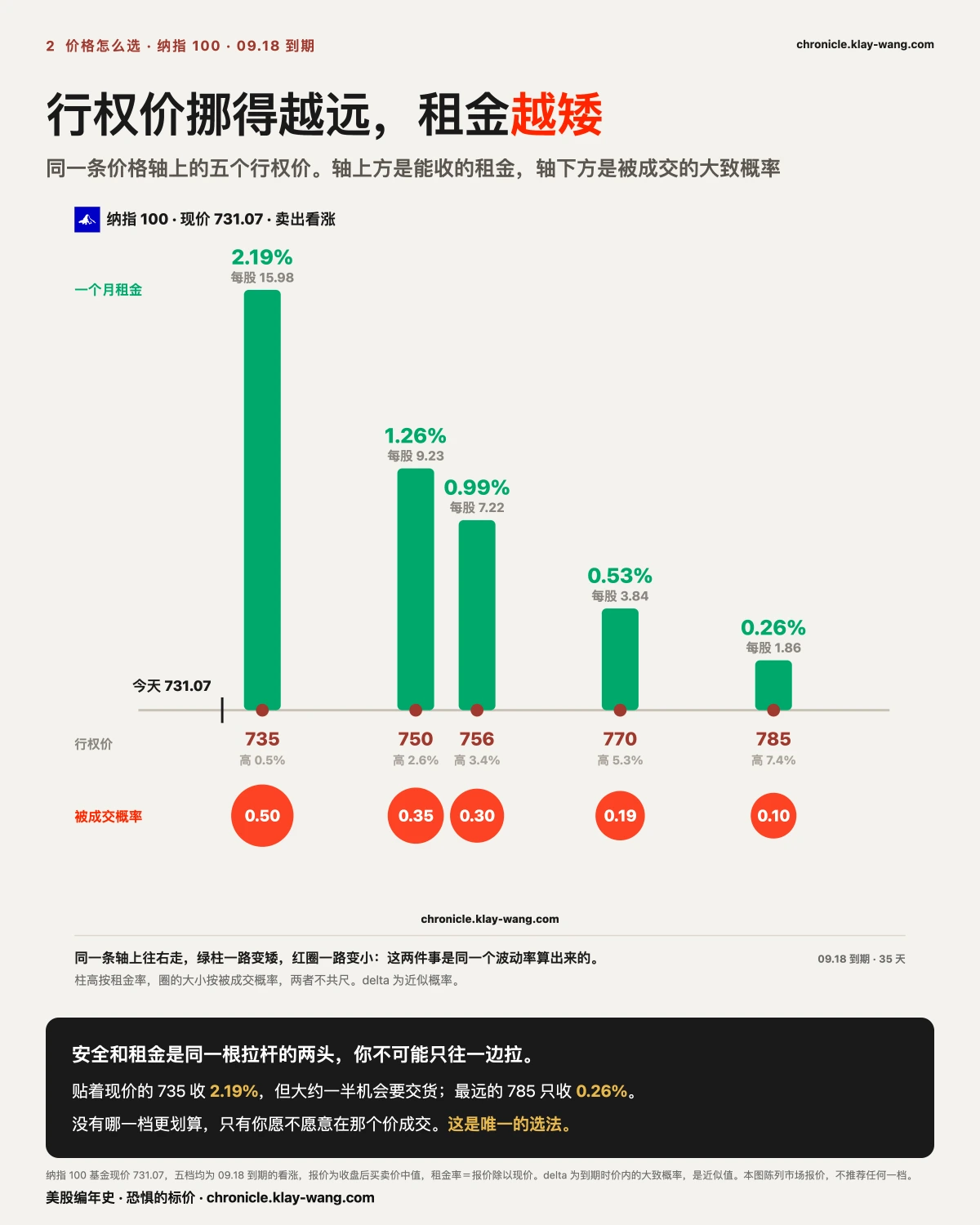
量级跟你无关,方法跟你有关。搬到更多人手里真有的东西上,比如纳指 100。同一只票同一个到期日,只换行权价,08 月 14 日收盘后的真实报价是这样:
| 被成交概率 | 行权价 | 距现价 | 一个月租金 |
|---|---|---|---|
| 0.50 | 735 | 高 0.5% | 2.19% |
| 0.30 | 756 | 高 3.4% | 0.99% |
| 0.19 | 770 | 高 5.3% | 0.53% |
| 0.10 | 785 | 高 7.4% | 0.26% |
贴着现价卖,一个月收 2.19%,但大约一半机会要交货;挪到高 7.4% 的地方安全多了,只收 0.26%。安全和租金是同一根拉杆的两头,你不可能只往一边拉。
所以没有哪一档更划算。只有一个问题:你愿不愿意在那个价成交。 愿意就是那一档,不愿意,租金再高也跟你无关。这就是全部的选法,也正是前一节那笔交易在做的事。
反过来卖看跌是同一张表倒着看:0.30 对应 711(低 2.7%)收 1.24%,0.10 对应 666(低 8.9%)收 0.38%。一个细节:越往下的看跌,隐含波动率越高,从 20.5 升到 25.4。这是常见的偏斜,不是数据错了,市场对下跌的定价从来比对上涨贵。
那几个吓人的词,一句话就够。 隐含波动率,市场猜它未来会晃多厉害,像车险保费看你开车猛不猛;分位,今天这个价钱在它自己过去一年里排第几;Delta,到期时被成交的大致概率,0.30 就是大约三成机会真要交货;Theta,你收的那笔钱靠时间一天天变成你的,像冰块放在桌上。这几个词都不预测涨跌,只描述价钱和概率。
日期上,三十到四十五天是常见区间,更要紧的是看窗口里有没有它的财报。举我们表里的例子:09 月 18 日到期这个窗口,九只观察票里只有英伟达要在窗口内交卷,其余的都排在 10 月底以后。
〔收手〕四种结局,开仓那一刻就全在桌上了
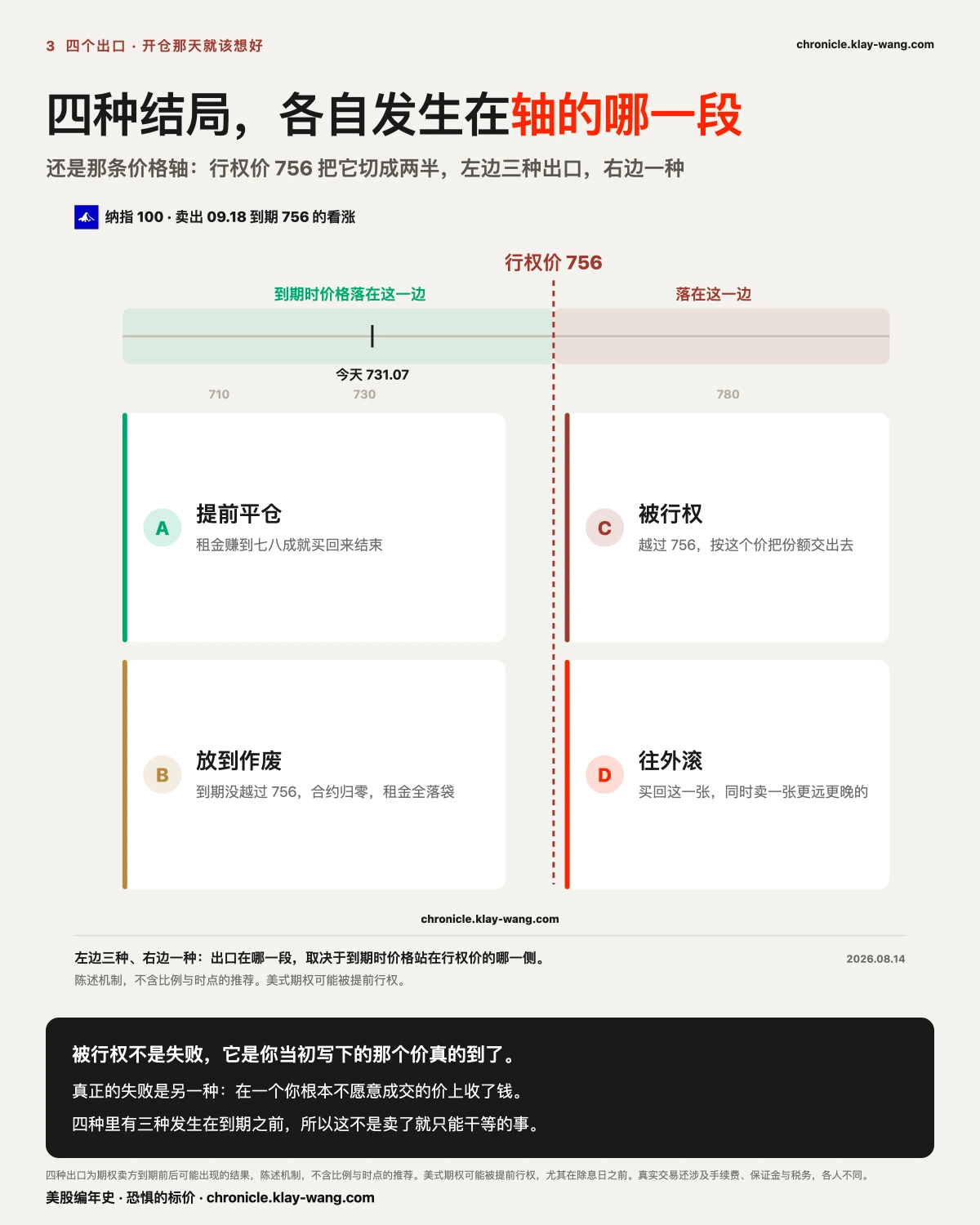
提前平仓:租金赚到七八成就买回来结束,剩下那点钱要拿最后几天的风险去换。
放到作废:到期没越过行权价,合约归零,收的钱全落袋,票还在手上。
被行权:价格越过行权价,票按那个价交出去,或者按那个价接进来。
往外滚:买回这一张,同时卖一张更远更晚的,代价是钱压得更久。
四种里有三种发生在到期之前,所以这不是卖完就只能干等的事。
关于被行权要多说一句:它不是失败,是你当初写下的那个价真的到了。 真正的失败是另一种:在一个你根本不愿意成交的价上收了钱,价格真到了才发现自己不想接。
所以整件事的顺序是:先想清楚你愿意在什么价成交,再去看市场给这个价开了多少钱。 反过来做的人,是先看见租金高,再回头说服自己愿意那个价。
⚠️ 期权卖方承担被行权的义务,美式期权可提前行权。本节写的是怎么读这几个数,不是该买什么。
〔下周看点〕本周记的账,大多数在下周五开奖
- 周二 08.18:Reddit 开盘前正式进入标普 500。公告日的跳空 11.17 个百分点已经记下,生效日的跳空到时候对照,这是两段完全不同的定价。
- 周三 08.19:波动率期货换月日,曲线形状要连着滚动效应一起读。
- 周五 08.21:月度期权到期日,本周记录在案的合约绝大多数在那天开奖,逐案收卷。
这篇适合转给谁
- 手里拿着指数基金、但从来没卖过 covered call 的人:第 5 到第 7 节就是给他的,五分钟能看完,看完至少知道自己在决定什么。
- 每次刷到某某清仓某某就跟着紧张的人:第 4 节告诉他那些文件描述的是六周前的事。
- 问过你大资金到底在干嘛的人:第 3 节那十二座就是答案的一部分,而且是当天就摆在明面上的。
今天值得带走的三句话
- 申报文件告诉你他们买了什么,期权链告诉你他们愿意用什么价买。前者要等 113 天,后者当天就写着。
- 一笔交易真正的成本不是行权价,是行权价减去先收到的那笔钱。段永平那笔是 115 减 23.26 等于 91.74。
- 安全和租金是同一根拉杆的两头。所以没有哪一档更划算,只有一个问题:你愿不愿意在那个价成交。
🌍 English edition
⚡ Three-Line Summary
- Both voiding conditions we published this week fired, and we deleted nothing. The index set two records and seven of seventeen names still fell.
- A full rescan found not three builds but twelve, across three weeks, roughly four million contracts, with the payout centre walking from 10.7% below the index to 38.3% below. Every one of them was visible the day it happened.
- Friday's 13F describes trades from six weeks ago. Same question, two answers: a price posted on the chain on July 24 does not reach a filing until November 14, one hundred and thirteen days later.
What This Issue Covers
Sections 1 to 3 are the week's three highlights: how we booked the calls we got wrong, seven of seventeen falling under record highs, and the twelve price lists laid down over three weeks. Section 4 is why Friday's 13F is old news. Sections 5 to 7 are how the same question is answered on the chain the same day, and how to read it if you already hold the stock.
[Scoreboard] Two Calls Overturned. Nothing Deleted.
On CPI day the pre-posted fence held and we wrote that the market had priced the event correctly. In the same section we published the condition that would void it: if the same fence broke on PPI day, that was a lucky hit rather than a correct price.
It broke the next day. SPY cleared the upper edge by 2.62 points and closed outside. By our own rule the reading was downgraded that day, and the text stayed.
The cross-section call fired the same way. We had written that Wednesday's selling was an event-day shape, void if intraday turned broadly positive the next day. Thirteen of seventeen printed positive intraday.
Four groups settled as written; two published checks went unkept and are logged as debts. A call that cannot be overturned is not a call.
[Cross Section] Two Records Above, Seven Names Falling Below
SPY rose 0.40% for the week and QQQ 1.11%, with records on Wednesday and Thursday. Seven of our seventeen names still fell.
The ends are far apart: SanDisk +35.38%, Micron +10.72%, AMD +6.42% at one end; Broadcom −8.13%, Amazon −4.31% at the other. Forty-three points between them. That 0.40% is what remains after all of it cancels out.
One number matters more than the change: the weekly range. Intel finished up 0.84%, almost still, on a range of 11.78%. It walked a twelve-point corridor and came back near where it started. Anyone holding it saw two prices more than a tenth apart.
The change is displacement. The range is the distance actually travelled. For one name in one week the two can differ tenfold.
On the cost side: front volatility fell from 15.46 to 14.25, down 1.21 points, while the one-year went 22.76 to 22.75, a move of 0.01. The front is mood, the far end is cost. Only the mood eased.
[Depth] Not Three Builds. Twelve, Over Three Weeks.
We wrote about three identical structures in this week's dailies. Over the weekend we rescanned the full table on the same published test: one day, one expiry, three evenly spaced put strikes, sized one to two to one, smallest leg above ten thousand contracts.
The answer is twelve, from July 24 to August 13, roughly four million contracts, eleven on SPY and one on QQQ.
Two shapes only appear once you line them up. The November 20 expiry was built three times, on August 3, 4 and 12, each one shifted 10 points higher as the index rose. And they went deeper: the payout centre moved from 10.7% below the index to 38.3% below.
Five have been resampled and all verified. The other seven were never resampled and are marked unknown.
The limits stand: we do not name the structure, guess who did it, or infer direction. Shape and what stayed overnight are all we can speak to.
But one thing these twelve already settle: over three weeks, somebody repeatedly wrote down, in the open, the position at which they wanted to be paid if it fell. Every one of those was visible the same day.
[13F] The News Is New. The Trades Are Not.
That is the whole point of the previous section: those twelve were visible on the day. The volume sits there when it is built, and the next morning's open interest answers whether it was real. Anyone can check.
This week also produced the opposite kind of information.
Friday was the second-quarter 13F deadline, which is why your feed filled with headlines about who exited what.
A 13F is a quarter-end snapshot. Q2 closed on June 30 and the filing window is 45 days, landing on Friday. The documents are new; the trades inside them are six weeks old.
Two more things it does not tell you: when the position was opened, and at what price. You only see what was left at quarter end.
[The Other Route] The Chain Answered on the Day
One place needs no six-week wait. A contract states exactly what a 13F omits: what price, and by when.
On July 24 our long-dated screen logged a SpaceX put, December 18 expiry, strike 115: 1109 contracts traded against 7447 standing. The next settlement showed 8398, up 951, keeping 85.8% of that day's volume, which by our fixed test is a real build.
We did not know whose it was. A month later Duan Yongping said publicly that he had sold 1000 of them at 23.26 per share. Our ruler read 951. His own number was 1000.
The part most people get wrong is not the 2.326 million dollars received. It is that his cost to take delivery is not 115. It is 91.74, because the 23.26 came in first.
Twelve days later SpaceX closed at 108.27, down 13.61% on earnings day, with an intraday low of 106.66. He did not wait to be assigned. He bought 100,000 shares outright. What he said and what he did were the same thing.
That price was visible on the chain on July 24. It will not appear in a filing until November 14. One hundred and thirteen days apart.
[How to Read It] If You Already Hold the Stock
Scale is not the point; the method is. Same underlying, same expiry, only the strike changes. Real quotes on the Nasdaq 100 fund after the August 14 close: at a 0.50 chance of assignment, strike 735, 0.5% above spot, one month of rent 2.19%. At 0.30, strike 756, 3.4% above, 0.99%. At 0.19, strike 770, 5.3% above, 0.53%. At 0.10, strike 785, 7.4% above, 0.26%.
Safety and rent are two ends of one lever. You cannot pull only one.
So no strike is the better deal. There is only one question: would you actually be happy to transact at that price. If yes, that is your strike. If no, the rent does not matter.
Four exits exist, and all four are on the table the moment you open: close early once most of the rent is earned; let it expire worthless and keep the stock; be assigned at the price you wrote down; or roll further out. Three of the four happen before expiry.
Assignment is not failure. It is the price you chose arriving. The real failure is collecting money at a price you never wanted, and finding out only when it gets there.
⚠️ An options seller carries the obligation to be assigned, and US-style options can be assigned early. This section is about reading the numbers, not about what to buy.
[Next Week] Most of This Week's Files Settle on Friday
Reddit joins the S&P 500 before Tuesday's open. The announcement-day gap of 11.17 points is already on record; the effective-day gap is its counterpart, and the two are priced in completely different ways.
Wednesday is the volatility futures roll, so read the curve's shape that week together with the rolling effect.
Friday is the monthly expiry, when most of the contracts logged this week settle at once.
Three Lines Worth Keeping
- A filing tells you what they bought. The chain tells you what price they were willing to pay. The first takes 113 days; the second is there the same day.
- The real cost of that trade is not the strike. It is the strike minus what came in first: 115 less 23.26 is 91.74.
- Safety and rent are two ends of one lever. No strike is the better deal; there is only whether you would be happy to transact there.
本站不提供投资建议,不预测方向,不做择时。